
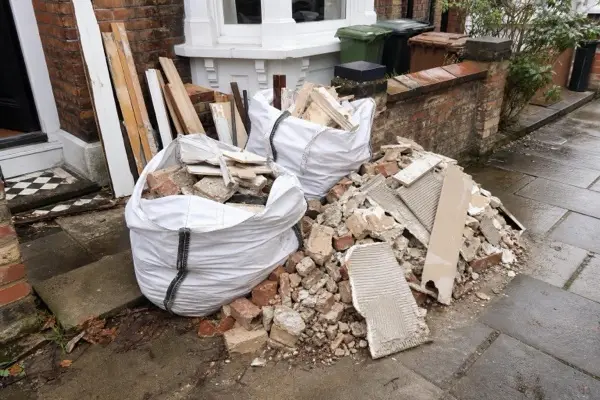
 Hi, can I get a price for this? SE15
How to Dispose of Plasterboard in London
Why plasterboard can’t go in a skip with everything else, which London tips accept it, what collection costs, and how to handle board in a pre-2000 property.
Read guide
Most London boroughs now require a written waste management plan as part of the event licence or parks hire agreement. Plans get rejected for the same three reasons every time – vague volume estimates, no bin map, and no named waste carrier.
First-time event organisers often think the plan is a long document. It isn't – it's a short, specific one. Two pages done well usually passes; ten pages of copy-paste usually fails.
Licensing officers at Westminster, Camden, Hackney, Southwark, Tower Hamlets, Lambeth, Islington and Kensington & Chelsea all look for the same six things, and they're all checkable against objective evidence.
Park authorities – Royal Parks, Lee Valley, the GLA and individual borough parks teams – add a seventh requirement: a post-event site restoration commitment with a handover timeline.
This page explains the six-point structure every London council waste plan needs, gives a worked example, and links to the service we offer to write and sign the plan for you under our waste carrier registration.
State the attendance, event duration, and kg of waste per attendee (a defensible London average is 0.5–1.2kg). Break by stream: residual, mixed recycling, food waste, glass. A festival estimate should also include build-up and de-rig waste separately.
Types (240L, 1100L, FEL, recycling station), total count, stream allocation, and a site map showing each bin location. A written bin list without a map is the single most common reason for plan rejection.
Show collection timing aligned to event peaks – not fixed route times. Include a contingency for overflow: who responds, how quickly, and from where. Reference any out-of-hours permits needed for early-morning collection.
Set a realistic percentage diversion target (60–85% is credible; 98% is not), explain how streams will be kept segregated, and name the recycling facilities. Evidence in the post-event report – weighbridge tickets per stream.
Name of the registered carrier, EA licence number (ours is CBDU527690), insurance certificates, and a copy of the duty-of-care transfer note template. Councils can and do verify the licence number on the day.
Overflow response, extreme weather, equipment failure. Post-event: handover window to the venue or park ranger, and commitment to restore the site to pre-event condition with photo evidence.
"Several bins" or "waste will be collected regularly" doesn't pass. Give specific kg-per-attendee, stream percentages and bin counts.
A bin list without a map showing placement gets sent back. The map lives alongside the stewarding plan.
Upper-tier licence needed for commercial waste; lower-tier carriers are refused on larger events. Verify the level before submitting.
Claiming 95%+ recycling on an outdoor public event is almost never credible. Set defensible targets you can actually evidence.
Simpler Recycling now requires food waste to be segregated. A plan that lumps it into residual fails compliance check.
Councils want to see the failure mode covered – overflow response, equipment breakdown, weather. One paragraph is enough if it's specific.
In practice, every borough and Royal Park authority does – though the format and strictness vary. Events at the following locations almost always need a full written plan signed by a registered waste carrier:

No callbacks, no surprises. Snap a photo of your rubbish, send your postcode, get a fixed price back.
Office hours: Mon–Fri 6am–7pm, Sat 10am–5pm
Can’t see your question? Send us a photo on WhatsApp or call – we reply in minutes.
Practical tips on waste removal, recycling, and keeping your London property clear.
Why plasterboard can’t go in a skip with everything else, which London tips accept it, what collection costs, and how to handle board in a pre-2000 property.
Read guideWhat London tips will take, whether rubble can go in a skip, what a builder’s bag weighs, and when a collection beats doing it yourself.
Read guideThe decisions that actually cut event waste – cup systems, bin placement, trader rules – and the ones that only look good on paper.
Read guideTell us what needs to go and get a fixed price before we arrive. We do all the lifting, load the lorry and sweep up after.
Or call us free08 00 599 99 96