
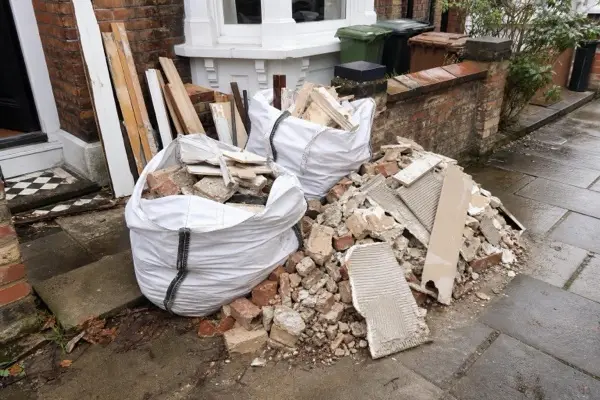
 Hi, can I get a price for this? SE15
How to Dispose of Plasterboard in London
Why plasterboard can’t go in a skip with everything else, which London tips accept it, what collection costs, and how to handle board in a pre-2000 property.
Read guide
Each year, the food service industry in the United Kingdom is estimated to produce over 400,000 tonnes of waste that could have been avoided. Food waste has huge social, environmental, and economic consequences, so it's critical for all food businesses, from producers to retailers and food vendors/restaurant owners, to do their part to ensure it's handled properly and efficiently.
Food that is discarded does not decompose as easily as you might think. Food waste that ends up in landfills rots and releases methane, a greenhouse gas that is twenty-five times more potent than carbon dioxide, which is concerning given the current climate crisis.
Instead of ending up in a landfill or being incinerated, food waste can be collected for recycling and sent to specialised processing plants, where it can be converted into electricity or compost for farmers. If your local council recycles food waste, take advantage of it by recycling all of your inedible scraps like eggshells, coffee grounds, and similar items, as well as any food that has passed its use-by date. Remove all packaging before placing it in your kitchen caddy; only food waste should be placed there.
There's no time to waste if your company produces or works with food in any way, and making major changes is easier than you might think.
Here are a few reasons commercial food waste disposal is important:
It saves you money: The amount of money you can save by committing to proper food waste disposal is highly dependent on the amount of waste you generate and the policies you currently have in place. However, any efforts you make to manage food waste may pay off in unexpected ways in the future. Many people are concerned about this issue right now. Your commitment to responsible food waste policies may one day help you land new business or improve your reputation among influential community members.
It protects the environment: Food that ends up in landfills isn't just thrown away; it's also harmful to the environment. Our environment is also harmed by it. Methane, a harmful greenhouse gas, is produced when organic waste decomposes. The energy and resources used to produce and ship the food are also squandered. Food waste is responsible for approximately 11% of the greenhouse gas emissions produced by the food industry. Commercial food waste disposal practices keep organic waste out of landfills, reducing greenhouse gas emissions
The law supports it: Food waste is regulated, wherever you do business. Since 2025, Simpler Recycling rules in England require most businesses to keep food waste separate from general waste and have it collected for recycling. Your food waste then goes to recycling, such as anaerobic digestion or composting, rather than landfill.
It is easy to do: It doesn't have to be your responsibility as a business owner to figure out how to properly dispose of commercial food waste. You're already overworked. To change your business's food waste disposal practices, all you need is motivation. Just call us at Any London Waste and we'll take care of your food waste disposal.
Collection: This is when the food waste is carried from your business location by our team of professionals. Your waste must be carefully put into a waste bin for proper collection.
Transportation: We have ready vehicles with professional drivers who will help transport your waste to a licensed anaerobic digestion facility. Once the waste is loaded, it will be transported for processing.
Processing: This is the final step that involves the recycling of wastes. Recyclable wastes are processed into other products to benefit both your business and the environment.
Food waste isn't just a social or humanitarian issue; it's also a problem for the environment. We waste all the energy and water that goes into growing, harvesting, transporting, and packaging food when we throw it away. Rotting food produces methane, a greenhouse gas that is even more potent than carbon dioxide.

Examples of restaurant food waste include:
Note: Shredded newspaper, cardboard, and paper should be placed in recycling, not food waste bins.
Certain items cannot be included in food waste recycling and should be sorted separately. These include non-food items such as nappies, oil and liquid fat, any type of packaging, and liquids such as milk which may leak during transport and cause spillages.
Non-food products are those that cannot be eaten but are commonly found in supermarkets, such as cleaning supplies and toilet paper. Below is a list of a few of them.
The 120-litre bin is the size of a standard residential wheeled bin. Depending on your needs, we can collect daily, weekly, or fortnightly. If your kitchen doesn't produce much food waste, a 120-litre bin might be the best option.
A larger wheeled bin for food waste. Ideal for a busy café or restaurant that produces a steady amount of food waste every day. Depending on your contract and organisational needs, waste can be collected on a daily, weekly, or fortnightly basis.
Our largest food waste bin. Ideal for a high-volume kitchen that produces substantial amounts of food waste. This container can be collected on a daily, weekly, or fortnightly basis, depending on your contract requirements and business needs.
There are many advantages to using Any London Waste's local food waste collection service:
Who we collect from:
The waste hierarchy is an EU concept that underpins all the UK's waste policies. The waste hierarchy requires anyone in charge of waste management to prioritise waste prevention, reuse, and recycling, followed by other types of recovery, such as energy recovery, and finally, disposal. If you don't handle your waste properly, your local council or another authority can issue you a 'fixed penalty notice'. This will detail which offence you've committed, as well as the potential penalty amount.
No callbacks, no surprises. Snap a photo of your rubbish, send your postcode, get a fixed price back.
Office hours: Mon–Fri 6am–7pm, Sat 10am–5pm
Can’t see your question? Send us a photo on WhatsApp or call – we reply in minutes.
Practical tips on waste removal, recycling, and keeping your London property clear.
Why plasterboard can’t go in a skip with everything else, which London tips accept it, what collection costs, and how to handle board in a pre-2000 property.
Read guideWhat London tips will take, whether rubble can go in a skip, what a builder’s bag weighs, and when a collection beats doing it yourself.
Read guideThe decisions that actually cut event waste – cup systems, bin placement, trader rules – and the ones that only look good on paper.
Read guideTell us what needs to go and get a fixed price before we arrive. We do all the lifting, load the lorry and sweep up after.
Or call us free08 00 599 99 96