
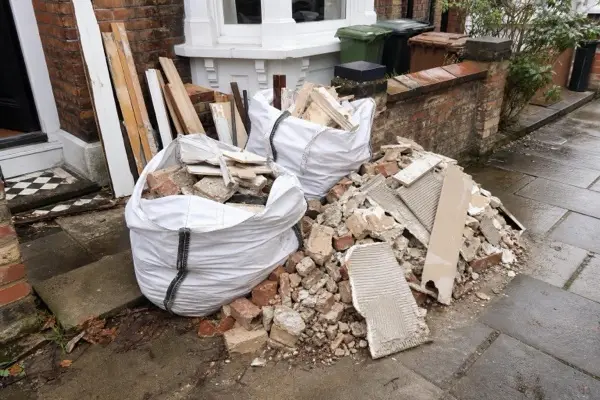
 Hi, can I get a price for this? SE15
How to Dispose of Plasterboard in London
Why plasterboard can’t go in a skip with everything else, which London tips accept it, what collection costs, and how to handle board in a pre-2000 property.
Read guide
A site waste management plan (SWMP) sets out, before work starts, what waste a project will produce, how each material will be handled, and what actually happened once the job is finished. It is a working document, not a form: the second half only gets filled in as collections take place.
The statutory requirement in England was revoked in 2013, so for most London projects a SWMP is no longer a legal obligation. It has not gone away, though – it has moved into contracts. Principal contractors ask for one, planning conditions on larger schemes require one, and BREEAM credits depend on it. The duty of care that sits underneath it never went anywhere at all.
We do not sell the document. We supply the thing that makes it credible: real weights, by material stream, per collection, with the transfer notes behind them. If you want the plan built and maintained from that data as the job runs, that is part of our construction site waste management service – call 08 00 599 99 96 and tell us the project.
Principal contractors – as a condition of subcontract, usually with a diversion-from-landfill target attached.
Planning conditions – common on larger London schemes, often tied to a demolition or construction management plan.
BREEAM assessors – Wst 01 credits need pre-set targets and evidenced outcomes.
Clients with reporting duties – public bodies, listed companies and anyone reporting on scope 3 emissions.
Most plans fail on the same thing: the forecast is written carefully and the actuals are never captured. Three months later somebody is reconstructing tonnages from invoices, and a skip invoice does not tell you what was in the skip.
Two decisions on site fix that almost entirely. Separate the streams from day one, so each collection has one material and a real weight against it – that is what on-site containers are for. And keep the inert stream genuinely clean: broken concrete, brick and hardcore with no timber or packaging in them go for crushing into recycled aggregate, which is both the cheapest disposal route and the largest single contributor to your diversion figure. See rubble and hardcore collection for how that stream is handled.
Plasterboard is the other one worth planning for. Gypsum cannot go to landfill mixed with biodegradable waste, so it needs its own container and its own line in the plan from the start – retro-fitting that halfway through a fit-out is expensive. See plasterboard collection.
Whether or not you keep a SWMP, the waste producer’s duty of care under the Environmental Protection Act does not lapse. In practice that means three things on every London site:
Check the carrier. Verify the licence on the Environment Agency public register before the first collection.
Describe the waste properly. A vague description on a transfer note is itself a breach.
Keep the notes for two years. Consignment notes for hazardous waste, three.
No callbacks, no surprises. Snap a photo of your rubbish, send your postcode, get a fixed price back.
Office hours: Mon–Fri 6am–7pm, Sat 10am–5pm
Can’t see your question? Send us a photo on WhatsApp or call – we reply in minutes.
Different jobs need different set-ups. A kitchen rip-out is not a long-running site, and a tonne of broken concrete is not the same problem as a stack of plasterboard. Pick the one that matches your project – or call us on 08 00 599 99 96 and we’ll tell you which it is.
Practical tips on waste removal, recycling, and keeping your London property clear.
Why plasterboard can’t go in a skip with everything else, which London tips accept it, what collection costs, and how to handle board in a pre-2000 property.
Read guideWhat London tips will take, whether rubble can go in a skip, what a builder’s bag weighs, and when a collection beats doing it yourself.
Read guideThe decisions that actually cut event waste – cup systems, bin placement, trader rules – and the ones that only look good on paper.
Read guideTell us what needs to go and get a fixed price before we arrive. We do all the lifting, load the lorry and sweep up after.
Or call us free08 00 599 99 96